

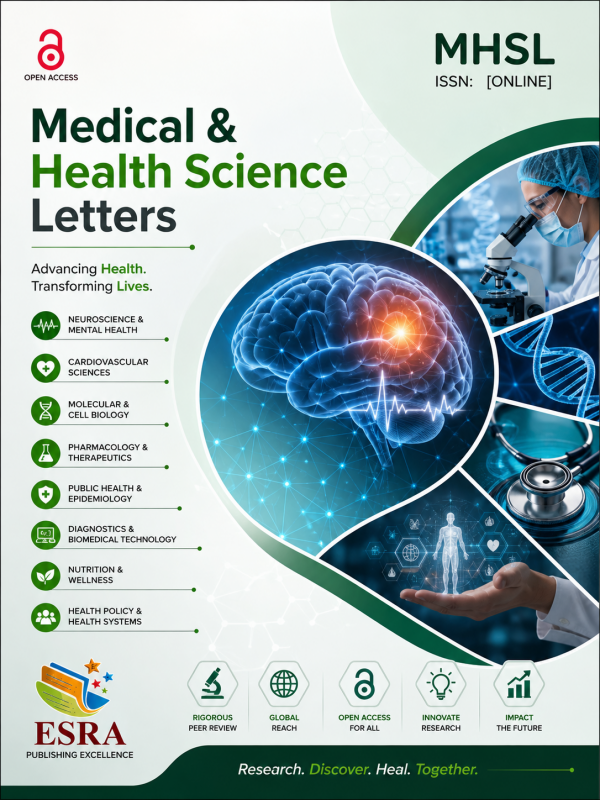
Medical and Health Science Letters
DOI :
language http://www.esrapublications.com/View-Journal.php?id=17&title=mhsl
Medical & Health Science Letters (MHSL) is an International, peer-reviewed, Open-Access Journal covering research in Medical Sciences, Health Sciences, Biomedical Sciences, Clinical Sciences, Public Health, and related disciplines.
The Journal publishes scientifically rigorous contributions addressing current developments in the prevention, diagnosis, treatment, management, and understanding of human diseases and health conditions, as well as research concerning health promotion, disease prevention, healthcare delivery, biomedical technologies, and population health.
MHSL welcomes original research articles, research letters, short communications, review articles, case reports, case studies, technical contributions, and focused perspectives based on clinical, laboratory, epidemiological, experimental, computational, translational, or interdisciplinary approaches.
Aim and Scope
The scope of MHSL includes, but is not limited to, the following areas:
1. Clinical Medicine
- General and internal medicine
- Clinical diagnosis and management
- Evidence-based medicine
- Multisystem diseases
- Acute and chronic diseases
- Clinical investigations and therapeutic studies
- Patient-centred care
- Clinical outcomes and prognostic studies
2. Medical Specialties
- Cardiology and cardiovascular medicine
- Neurology and neurosciences
- Oncology and cancer research
- Endocrinology and metabolic diseases
- Gastroenterology
- Nephrology
- Pulmonology and respiratory medicine
- Rheumatology
- Dermatology
- Psychiatry and behavioural medicine
- Ophthalmology
- Otorhinolaryngology
- Paediatrics
- Geriatric medicine
- Obstetrics and gynaecology
- Urology
- Orthopaedics
- Anaesthesiology and critical care
- Emergency medicine
- Infectious diseases
3. Biomedical Sciences
- Molecular medicine
- Cellular and molecular biology
- Human genetics and genomics
- Proteomics and metabolomics
- Biochemistry
- Molecular pathology
- Immunology
- Microbiology
- Medical biotechnology
- Stem-cell and regenerative medicine
- Translational biomedical research
4. Pharmacology and Therapeutics
- Pharmacology
- Clinical pharmacology
- Pharmacotherapy
- Drug discovery and development
- Drug safety and pharmacovigilance
- Drug interactions
- Therapeutic efficacy and outcomes
- Drug delivery systems
- Natural products and therapeutic agents
- Precision and personalized therapeutics
5. Medical Diagnostics and Laboratory Sciences
- Clinical pathology
- Laboratory medicine
- Biochemical diagnostics
- Molecular diagnostics
- Immunological diagnostics
- Microbiological diagnostics
- Biomarkers
- Point-of-care diagnostics
- Biosensors
- Early disease detection
- Diagnostic accuracy and validation
6. Medical Imaging and Technology
- Radiology and diagnostic imaging
- Magnetic resonance imaging
- Computed tomography
- Ultrasound and ultrasonography
- Nuclear medicine imaging
- Medical image analysis
- Computer-assisted diagnosis
- Artificial Intelligence in medical imaging
- Digital health technologies
- Medical instrumentation
7. Public Health and Epidemiology
- Public health
- Epidemiology
- Disease surveillance
- Communicable and non-communicable diseases
- Population health
- Health promotion and disease prevention
- Community health
- Environmental and occupational health
- Maternal and child health
- Global health
- Health inequalities and determinants of health
8. Nutrition and Health
- Human nutrition
- Clinical nutrition
- Nutritional deficiencies
- Nutritional epidemiology
- Diet and chronic disease
- Functional foods and nutraceuticals
- Food–health interactions
- Metabolic health
- Personalized nutrition
- Nutrition across the life course
9. Allied and Health Sciences
- Nursing science
- Physiotherapy
- Occupational therapy
- Rehabilitation sciences
- Medical laboratory sciences
- Radiological and imaging sciences
- Pharmacy and pharmaceutical sciences
- Dental and oral health sciences
- Speech and language sciences
- Optometry
- Health and clinical psychology
10. Mental and Behavioural Health
- Mental health
- Psychiatry
- Psychological medicine
- Behavioural health
- Neuropsychiatry
- Stress and coping
- Sleep and circadian health
- Substance-use disorders
- Cognitive and behavioural interventions
- Mental-health services and outcomes
11. Infectious Diseases and Microbial Health
- Bacterial, viral, fungal, and parasitic diseases
- Emerging and re-emerging infections
- Antimicrobial resistance
- Infection prevention and control
- Vaccines and immunization
- Host–pathogen interactions
- Clinical and molecular microbiology
- One Health approaches to infectious disease
12. Chronic Diseases and Ageing
- Diabetes and metabolic disorders
- Cardiovascular diseases
- Neurodegenerative diseases
- Cancer
- Chronic respiratory diseases
- Chronic kidney and liver diseases
- Multimorbidity
- Healthy ageing
- Geriatric health
- Age-related biological changes
13. Preventive, Community and Occupational Health
- Preventive medicine
- Community medicine
- Occupational health
- Workplace health and safety
- Environmental health
- Health education
- Vaccination and preventive interventions
- Screening programmes
- Lifestyle-related diseases
- Population-based interventions
14. Maternal, Child and Reproductive Health
- Maternal health
- Reproductive health
- Neonatal health
- Paediatric medicine
- Adolescent health
- Pregnancy-related conditions
- Fertility and reproductive technologies
- Perinatal medicine
- Child development and nutrition
15. Surgery and Procedural Sciences
- General and specialized surgery
- Minimally invasive procedures
- Robotic surgery
- Surgical technologies
- Perioperative medicine
- Surgical outcomes
- Trauma and emergency procedures
- Transplantation sciences
- Regenerative and reconstructive procedures
16. Rehabilitation and Physical Health
- Physical rehabilitation
- Neurological rehabilitation
- Musculoskeletal rehabilitation
- Cardiac and pulmonary rehabilitation
- Sports medicine
- Disability and functional recovery
- Assistive technologies
- Prosthetics and orthotics
- Exercise and therapeutic movement
17. Digital Health and Emerging Technologies
- Digital health
- Telemedicine and telehealth
- Mobile health
- Electronic health records
- Health information systems
- Artificial Intelligence and Machine Learning in healthcare
- Clinical decision-support systems
- Wearable and remote-monitoring technologies
- Internet of Medical Things
- Robotics and healthcare automation
- Virtual and augmented reality in healthcare
18. Medical Ethics, Policy and Healthcare Systems
- Medical ethics
- Bioethics
- Patient rights and informed consent
- Healthcare policy
- Health economics
- Healthcare management
- Health services research
- Healthcare quality and safety
- Patient safety
- Access to healthcare
- Health-system performance
19. Translational and Precision Medicine
- Translational medicine
- Precision medicine
- Personalized healthcare
- Genomic medicine
- Biomarker-guided treatment
- Molecularly targeted therapies
- Clinical–laboratory integration
- Bench-to-bedside research
- Real-world evidence
- Personalized disease prevention
20. Research Methods and Evidence-Based Health Sciences
- Clinical research methodology
- Epidemiological methods
- Biostatistics
- Systematic reviews and meta-analyses
- Clinical trials
- Observational studies
- Diagnostic and prognostic research
- Health outcomes research
- Evidence synthesis
- Reproducibility and research integrity
21. Emerging and Interdisciplinary Health Sciences
MHSL welcomes interdisciplinary research connecting Medical and Health Sciences with biology, chemistry, biotechnology, engineering, computer science, artificial intelligence, data science, environmental science, nutrition, psychology, social sciences, and related fields.
Emerging areas include:
- Artificial Intelligence in medicine
- Generative AI and clinical applications
- Computational medicine
- Digital therapeutics
- Precision and personalized healthcare
- Multi-omics and systems medicine
- Regenerative medicine
- Nanomedicine
- Biomedical engineering
- Wearable and implantable technologies
- Remote and decentralized healthcare
- One Health
- Sustainable healthcare technologies
Types of Contributions
As a Letters journal, MHSL welcomes concise and scientifically significant Research Letters and Short Communications, generally 2–8 pages when prepared according to the prescribed journal format/template.
Such contributions may report:
- Preliminary but meaningful clinical or laboratory findings
- Focused clinical studies
- Novel observations or hypotheses
- New diagnostic or analytical approaches
- Emerging therapeutic approaches
- Preliminary epidemiological findings
- New biomedical methods or technologies
- Case reports or clinically significant case observations
- Computational or AI-based healthcare findings
- Innovative interdisciplinary approaches supported by appropriate evidence
The Journal emphasizes scientific validity, methodological clarity, ethical conduct, appropriate statistical analysis, reproducibility, and relevance to medical or health-science practice.
Overall Scope
Medical & Health Science Letters (MHSL) encompasses research spanning the basic, clinical, translational, preventive, population, and applied health sciences. The Journal seeks contributions that improve understanding of human health and disease, strengthen diagnostic and therapeutic approaches, support disease prevention and health promotion, and advance healthcare technologies and practices.
Particular attention is given to research that establishes meaningful connections between biomedical discoveries, clinical applications, public health, healthcare technology, and patient or population outcomes.
Professor M. A. PASHA (Retd.,)
Editor-in-Chief (Incharge)
Bangalore University
Bengaluru, INDIA
E-mail: chief.editoresra@gmail.com
Professor AMER A. TAQA
Department of Dental Basic Science
College of Dentistry
Mosul University
Iraq Education
Email: amertaqa@hotmail.com
Professor Saber Mohamed Abd-Allah,
Faculty of Veterinary Medicine,
Beni-Suef University, 62511 Beni-Suef,
Egypt.
Email: abdallahsaber49@gmail.com
Dr. Farzana Khan Perveen
Founder Chairperson & Associate Professor
Department of Zoology, Shaheed Benazir Bhutto University,
Sheringal, Dir Upper, Khyber Pakhtunkhwa (KP), Pakistan
E-mail: farzana_san@hotmail.com
Professor Gannu Praveen Kumar
Professor and Principal in Sahasra Institute of Pharmaceutical
Sciences, Mulugu Road, Warangal
Andhra Pradesh, INDIA.
E-mail: ghalo2010@gmail.com
Dr. (Mrs) Padmini H.Sharma
Radhe Heights, Building No.-A
Flat No.-104 ,Sector No.-29, Ravet
Near Dr.D.Y.Patil College, Pradhikaran
Pune-412 101, INDIA
E-mail: pharmabrain20@yahoo.co.in
Mohammed Rageeb Mohammed Usman
Assistant Professor in Pharmacognosy,
Smt. Sharadchandrika Suresh Patil College of Pharmacy,
Chopda, Jalgaon,
Maharashtra,
INDIA
E-mail: rageebshaikh@gmail.com
Note: 1. Editor/s-in-Chief, Associate Editors, Assistant Editors, Editorial board members, Reviewers and other Members do not receive any honorarium or remuneration. These are nominated positions and are voluntarily accepted by the individual academicians.
2. If a Researcher/Scientist/Academician working in this field is voluntarily agreeing to be an Editor or a member of the Editorial Board, kindly submit your Resume/CV to chief.editoresra@gmail.com [mention the email subject: Interested to serve as an Editor/Editorial Board Member].
Use Microsoft Word Software and Times New Roman Letters for preparing the manuscript with double spacing (Use 14 Font size letters for the Title and 12 Font size letters for the rest of the manuscript).
The authors should ensure that, the manuscript has been 'spell checked' and 'grammar checked' before submission.
In order to verify originality of the work presented in the manuscript, your article may be checked by the originality detection service providers such as CrossCheck services.
Authors can use this check list to prepare their manuscripts before submission to the Journal for the Review process.
Title of the Article: Title should be concise and meaningful.
Complete Name/s of the Author/s:
One author should be designated as the corresponding author and his/her contact details have to be provided:
E-mail address:
Fax details:
Phone number/s:
Full postal address:
Provide the Address of all the authors, if from different institutions/countries.
Abstract/Graphical Abstract: Brief outlay of the work presented in the manuscript should reflect here.
Key words: (Maximum 6 Key words)
- Introduction
- Results and Discussion
There can be sub-divisions such as 2.1, 2.2 …. 2.1.1, 2.1.2…. under Results and Discussion.
References should be cited using the superscript format (1, 2‒4, 5,6, 7‒11)
The Figures and Schemes should include relevant captions.
The Table/s should include title/s, description, literature citation (if any) and footnote/s.
3. Experimental (for subjects where experiments are involved, including Science and Engineering subjects)
4. Conclusions
5. Acknowledgement/s
6. Financial Assistance: Financial assistance from the funding agencies to be mentioned here; if there is no funding involved, it should be mentioned clearly as ‘this work is not funded by any funding agencies’.
7. Conflict of Interest: Declarations/disclose of the conflict of interest has to be made by the authors.
8. References
Format:
Reference to a Journal publication:
[1]. S. Al-B. Abdullah, S. S. Tamer, M. Z. Ehab. Ultrason. Sonochem., 2013, 20, 1194–1202.
Reference to Article by DOI:
[2]. M. K. Slifka, J. L. Whitton. Clinical implications of dysregulated cytokine production. J. Mol. Med., 2000, doi:10.1007/s001090000086.
Reference to a Book:
[3] J. L. Luche, T. J. Mason. Sonochemistry, experiment to theoretical considerations: Advances in Sonochemistry, ed., JAI Press, London, 1993.
Reference to a chapter in an Edited Book:
[4] B. Brown, M. Aaron. The politics of nature. In: J. Smith (ed) The rise of modern genomics, 3rd Edn. Wiley, New York, 2001, pp 230−257.
Reference to a website:
[5] J. Bean. How the Internet has Changed (and created new) Holiday Rituals. Available at: http://www.techerator.com/2010/11/how -the-internet-has-changed-and-created-newholiday-rituals/, 2010. [Accessed 12 October 2013].
Supplementary Data should be provided along with the manuscript.
Apart from this,
Names of Referees (any FIVE) and their complete contact details who are working in the same/similar field of Research should be provided in a separate file.
Authors should also provide (if any) the copies of the permission obtained for use of copyrighted material from other sources including the Internet.
The authors should assure that, the work described in the article has not been published previously, except in the form of an abstract in a conference/symposium/seminar or as part of the academic thesis and it is not under consideration for publication elsewhere, and that its publication is approved by all the authors and by the responsible authorities where the work was carried out, and that, if accepted, it will not be published elsewhere in the same form in English language or in any other language, including the electronic media.
Note: If you find difficulty in submitting your manuscript through Login, you can directly submit it to submit@esrapublications.com OR chief.editoresra@gmail.com
Open-Access and Publication Processing Fee Policy
Open Access
All Open-Access Journals published by ESRA Publications Pvt. Ltd. provide free and unrestricted online access to their published articles. Readers can access, read, view, and download the full text of articles directly from the journal website without a subscription or pay-per-view fee.
ESRA Publications Pvt. Ltd. ensures that authors, university libraries, research institutions, and individual readers are not required to purchase a subscription or pay a pay-per-view fee to access or download Open-Access articles.
Accordingly, ESRA Publications does not generate revenue from the sale of electronic journal subscriptions or from pay-per-view access to individual articles.
Publication Processing Fee
Although access to the published articles is free for readers, online Open-Access publishing involves various operational and publication-related costs. These include:
- Maintenance of publishing infrastructure and online journal platforms
- Routine operation and management of journals
- Manuscript processing and editorial administration
- Peer-review and editorial processing
- Copyediting, formatting and preparation of manuscripts
- Online publication and website maintenance
- Indexing and metadata management
- Digital archiving and long-term preservation
- Maintenance of publication records and related services
To help meet these costs, ESRA Publications Pvt. Ltd. may charge a Publication Processing Fee (PPF), also commonly referred to as an Article Processing Charge (APC).
The PPF is payable only after a manuscript has been accepted for publication. The existence or amount of a PPF has no bearing on the editorial decision regarding acceptance or rejection of a manuscript.
No Submission or Registration Fee
There is:
- No manuscript submission fee
- No registration fee
- No page charge
- No subscription fee for readers
- No pay-per-view fee for accessing or downloading published Open-Access articles
Waiver and Financial Assistance
ESRA Publications recognizes that authors from low-income, lower-middle-income, and developing countries may face financial difficulties in meeting publication costs, particularly when institutional funding, research grants, or other financial support is unavailable.
Under appropriate circumstances, authors who are unable to pay the applicable PPF may request a full or partial waiver, discount, or financial assistance from the ESRA Publications Fund.
Such requests should normally be made at the appropriate stage of the publication process and will be considered on a case-by-case basis, subject to the applicable ESRA Publications policy.
Payment Information
Details regarding the applicable Publication Processing Fee and the available modes of payment will be communicated to the corresponding author after acceptance of the manuscript and before publication.
Payment of a PPF is solely intended to support the costs associated with Open-Access publication and does not constitute a fee for peer review or a guarantee of acceptance.
Commitment to Open Access
ESRA Publications Pvt. Ltd. is committed to maintaining free and unrestricted online access to its Open-Access publications, enabling researchers, students, academic institutions, libraries, professionals, and the general public to read and download published scholarly work without subscription or pay-per-view barriers.
Publication Processing Fee
|
Name of the Journal |
Regular PPF (For International Authors) |
Regular PPF (For Indian Authors) |
|
|
USD 250 |
Rs. 2500 |
|
|
|